

Product Overview
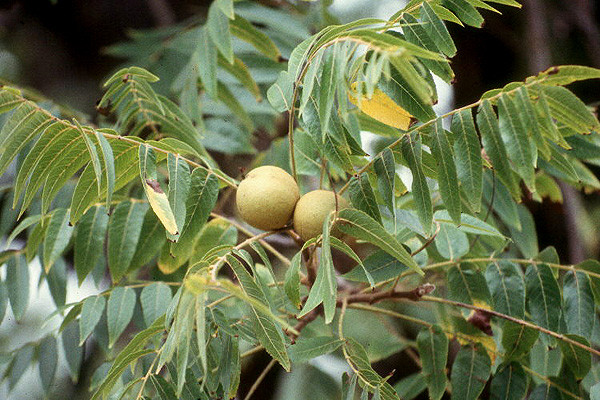
Black Walnut – Juglans nigra (2.5 gal/3-4 ft)
- Mature Height: 50–75 ft
- Spread: 50–75 ft
- Bloom Time: May-June
- Sun: Full sun
- Water: Medium
- Soil: Well-drained, rich soils (tolerates a range)
- Growth Rate: Medium
- Suggested Uses: Shade tree, wildlife habitat, timber value
- Tolerates: Drought (once established), clay soil
- Native: Jefferson County and Eastern United States
The Black Walnut is one of the defining trees of Jefferson County quietly shaping both the land and its history. Found along river bottoms, hillsides, and old homesteads, this stately native tree has long stood as a symbol of both ecological richness and economic value.
Recognizable by its dark, deeply furrowed bark and broad spreading crown, Black Walnut is a tree that commands presence. The tree produces juglone, a natural compound that limits the growth of some neighboring plants, giving walnut groves a distinct and often open understory. While this trait can make it challenging in landscaping, there are species of native plants that can tolerate it.
From a wildlife standpoint, few trees offer more. Black Walnut supports over 400 species of butterflies and moths, making it one of the most important host plants in the region. These insects, in turn, form the foundation of the food web, feeding countless birds. Warblers, woodpeckers, thrushes, orioles, nuthatches, and even wild turkeys utilize the tree for food and habitat. During the fall, its nuts become a vital food source for squirrels, chipmunks, and other mammals preparing for winter.
Equally important is the tree’s economic legacy. Black Walnut is widely regarded as one of the most valuable hardwoods in North America. Its rich, dark wood has been used for centuries in fine furniture, cabinetry, gunstocks, and veneer. A mature tree can be worth thousands of dollars, making it both a long-term investment and a living piece of natural capital.
In Jefferson County, Black Walnut played a quiet but essential role in early settlement. Along the Ohio River and its tributaries, walnut logs were harvested and transported via the river to markets in Pittsburgh and beyond. The wood found its way into homes, barns, tools, and furnishings throughout the region.
Families also made use of the tree in everyday life. The nuts were gathered each fall for food, while the husks were used to create rich brown dyes. In many ways, Black Walnut was a tree that provided—supporting both livelihoods and households across generations.
Today, the Black Walnut remains just as important. Whether valued for its timber, planted for its wildlife benefits, or simply appreciated as a native giant of the landscape, it continues to serve as a cornerstone species in Jefferson County ■