Product Overview
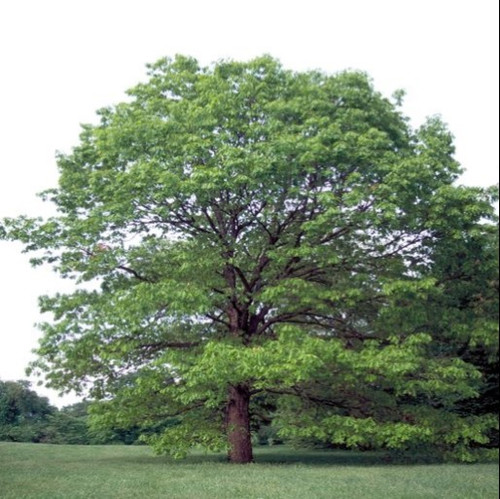
Shumard Oak – Quercus shumardii (3 gal/1-5 ft)
- Height: 40–60 ft
- Spread: 30–50 ft
- Bloom Time: April–May
- Bloom: Inconspicuous catkins
- Sun: Full sun
- Uses: Shade, wildlife habitat
- Tolerates: Drought, urban conditions
- Native: Jefferson County
The Shumard Oak is one of the most impressive native oaks of the Ohio River Valley, valued for its strength, longevity, and ecological importance. In Jefferson County and throughout eastern Ohio, this tree would have been a familiar presence along rich bottomlands and upland slopes where early settlers established farms and communities.
Named after geologist Benjamin Franklin Shumard in the mid-19th century, the tree was formally described as its own species during a period when American botanists were documenting the vast diversity of native hardwood forests. Although more commonly associated with southern river systems, Shumard Oak extends into Ohio and thrives in the fertile soils of the creek and river bottoms.
Ecologically, Shumard Oak is a powerhouse species. It supports over 400 species of butterflies and moths as a host plant, making it one of the most valuable trees for sustaining insect populations. These insects form the foundation of the food web, particularly for birds raising their young. In Jefferson County, Ohio, the acorns are utilized by a wide range of wildlife including Wild Turkey, Blue Jay, American Crow, Woodpeckers, and various songbirds. Larger birds and mammals rely on the nutritious acorns in fall and winter, while birds such as Blue Jays play a key role in dispersing the seeds, helping regenerate oak forests across the landscape. Though its flowers are subtle, Shumard Oak provides pollen resources for numerous pollinators, including native bees and other insects in early spring.
Its value lies not in showy blooms, but in its immense contribution to the ecosystem as a host and food source. With its stately form, brilliant red fall color, and unmatched ecological benefits, Shumard Oak stands as a living link between
Ohio’s natural history and its cultural past. ■