

Product Overview
Vernal Witch Hazel – Hamamelis vernalis (3 gal/2-3 ft)
- Height: 15 to 20 feet
- Spread: 15 to 20 feet
- Bloom Time: October to December
- Bloom Description: Yellow with tinge of red
- Sun: Full sun to part shade
- Suggested Use: Understory Tree – Specimen
- Tolerate: Deer, Erosion, Clay Soils
- Native to: Jefferson County
The plant is a highly underrated native species as it is attractive in late fall and early winter. The fragrant flowers are unique and look like a blonde version of Animal from the Muppets. The leaves are a rich and crisp green. The tree can be multi-trunked with contorted and irregular trunks that adds to the winter interest of this tree.
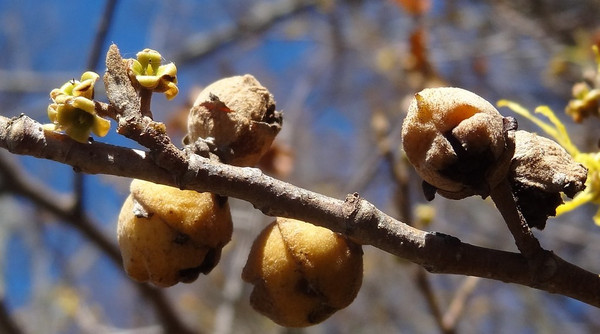
The flower is interesting as, when temperatures dip, the petals twist tighter to protect itself; when the temperatures are warmer, the petals relax more to allow available pollinators access. In spring, witch-hazel produces fruit that ripens in the summertime, and then in fall, when ready, the seed pod literally explodes, shooting the seed over 20 feet away. The seed takes two years to germinate. This plant is unusual as it can have leaves, flowers, and fruit on the limb all at the same time.
In 1588 Thomas Hariot recorded that Indians were using “wich-hazle” to make bows. Ben Franklin used a witch-hazel as a form of payment to the physician and Quaker Botanist Dr. John Fothergill who treated his leg.
The most famous use of the witch-hazel is that of locating water with the forked limbs being used as dowsing or divining rods. Early European settles observed Native Americans using American witch-hazel to find underground sources of water.
The blooms attract various native bees and honeybees. The tree is a host plant for 69 species of butterflies and moths in the greater Jefferson County and 17 genera of birds who are found utilizing the witch-hazel. ■