

Product Overview
Rattlesnake Master – Eryngium yuccifolium (1 gal/1-2 ft)
- Height: 3 to 5 feet
- Spread: 2 to 3 feet
- Bloom Time: June to August
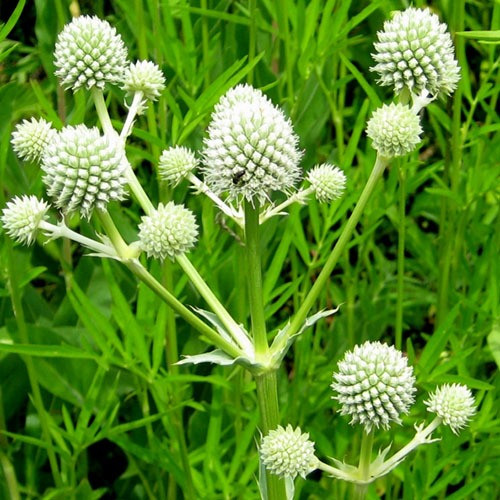
- Bloom Description: White to greenish spherical flowers
- Sun: Full sun
- Suggested Use: Pollinator gardens, prairie plantings, native landscapes
- Attracts: Bees, butterflies, beneficial insects
- Pollen/Nectar: Produces both nectar and pollen (excellent pollinator plant)
- Tolerate: Drought, poor soils
- Native to: Jefferson County
The Rattlesnake Master is a plant that seems to belong to another landscape—one of open prairies and sun-baked ground—yet it finds a home in pockets of Jefferson County where sunlight and well-drained soils prevail. With its bold, architectural form and yucca-like leaves, this native perennial stands apart from the softer textures of surrounding wildflowers.
The name Eryngium yuccifolium reflects its appearance: spiny, sword-like leaves radiate from the base, giving the plant a striking, almost sculptural presence. In early summer, stiff stems rise above the foliage, topped with globe-shaped flower heads that resemble small ivory pincushions. These unusual blooms are subtle in color but remarkable in structure, drawing attention upon closer inspection.
While not showy in the traditional sense, Rattlesnake Master is a magnet for life. Bees, wasps, flies, beetles, and butterflies crowd the flower heads, making it one of the most active pollinator plants in any meadow setting. Ecologically, it serves as a host for 27 species of butterflies and moths, contributing to the intricate web of life that supports birds and other wildlife.
As the season progresses, the flower heads dry and persist into fall, adding texture and winter interest to the landscape. The seeds provide food for birds, while the rigid stems offer structure for overwintering insects.
Native Americans used preparations from the root as a treatment for rattlesnake bites, giving rise to its memorable common name. While such uses are no longer practiced, the name endures as a reminder of the plant’s place in cultural history. ■